Tyler’s Portfolio
Prominent Skills: CAD, HVAC, Pneumatics, Controls systems, Prototyping Design, Data Analysis and simulation, Load bearing assemblies, Cross-Functional Communication
Education
BS, Mechanical Engineering | Washington State University (December 2024)
Work Experience
Undergraduate Researcher @ Washington State University | Jan 2024 - Feb 2025
Project Goal:
To design a set of temperature-controlled open lid boxes for the study of climate change-induced heatwaves on potato growth maintiaing at least 5C above ambient.
Solution Overview:
Combined dryer heating elements, variacs, centrifugal duct fans, and Arduino-controlled systems to adjust variac voltage to heating elements and maintain temperature.
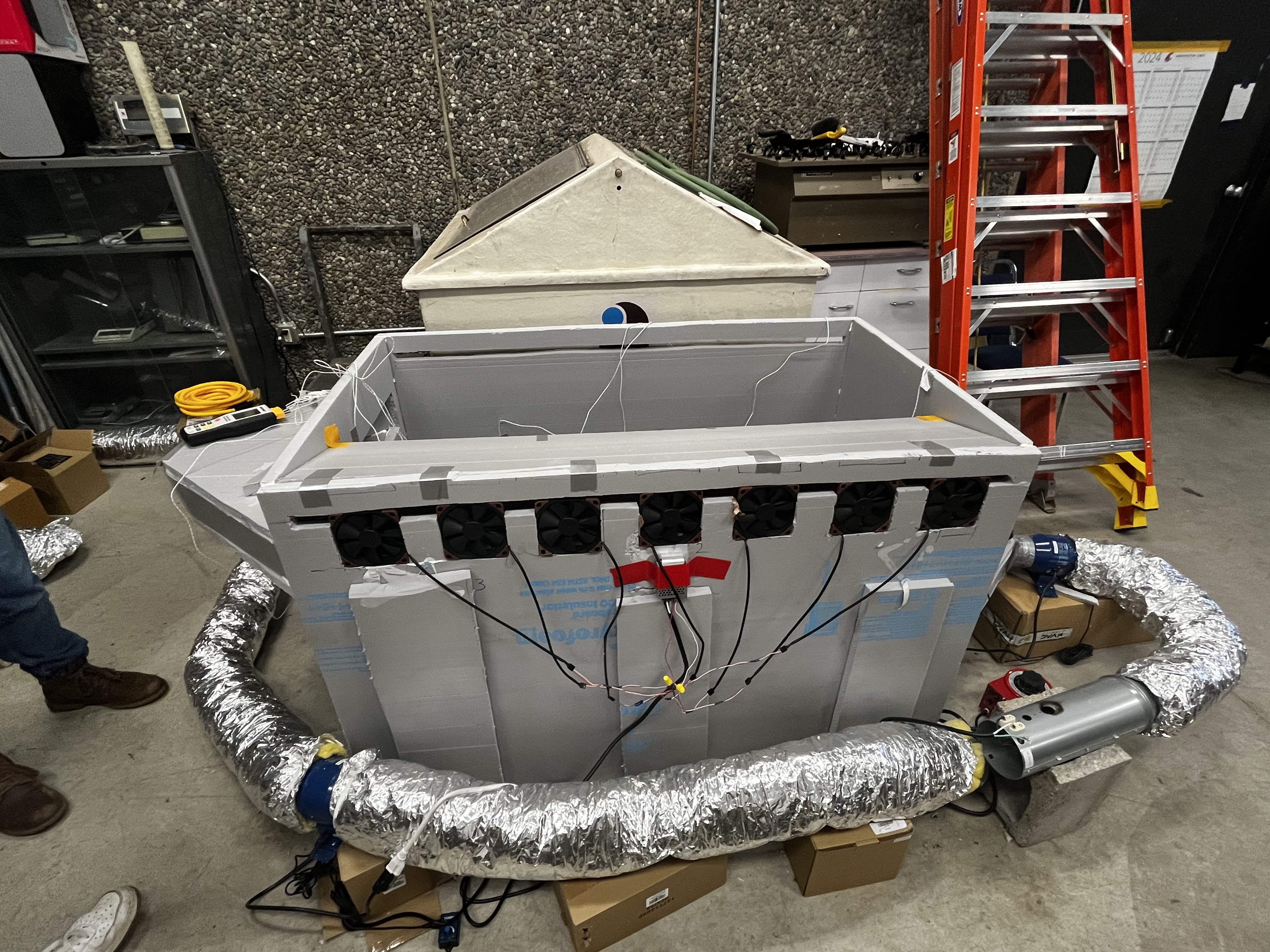
Early Prototype
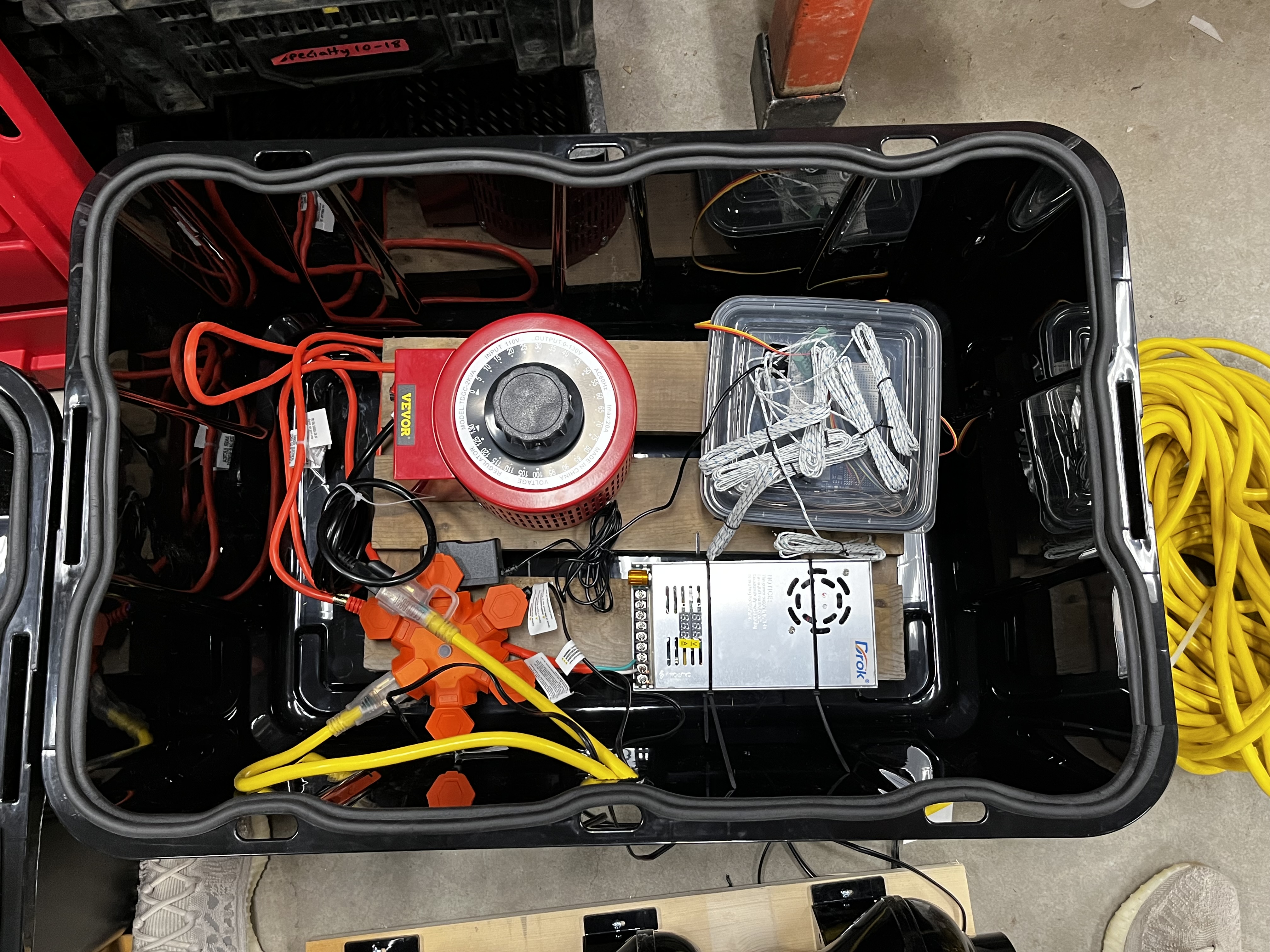
Controls System (excluding servo for variac voltage control)
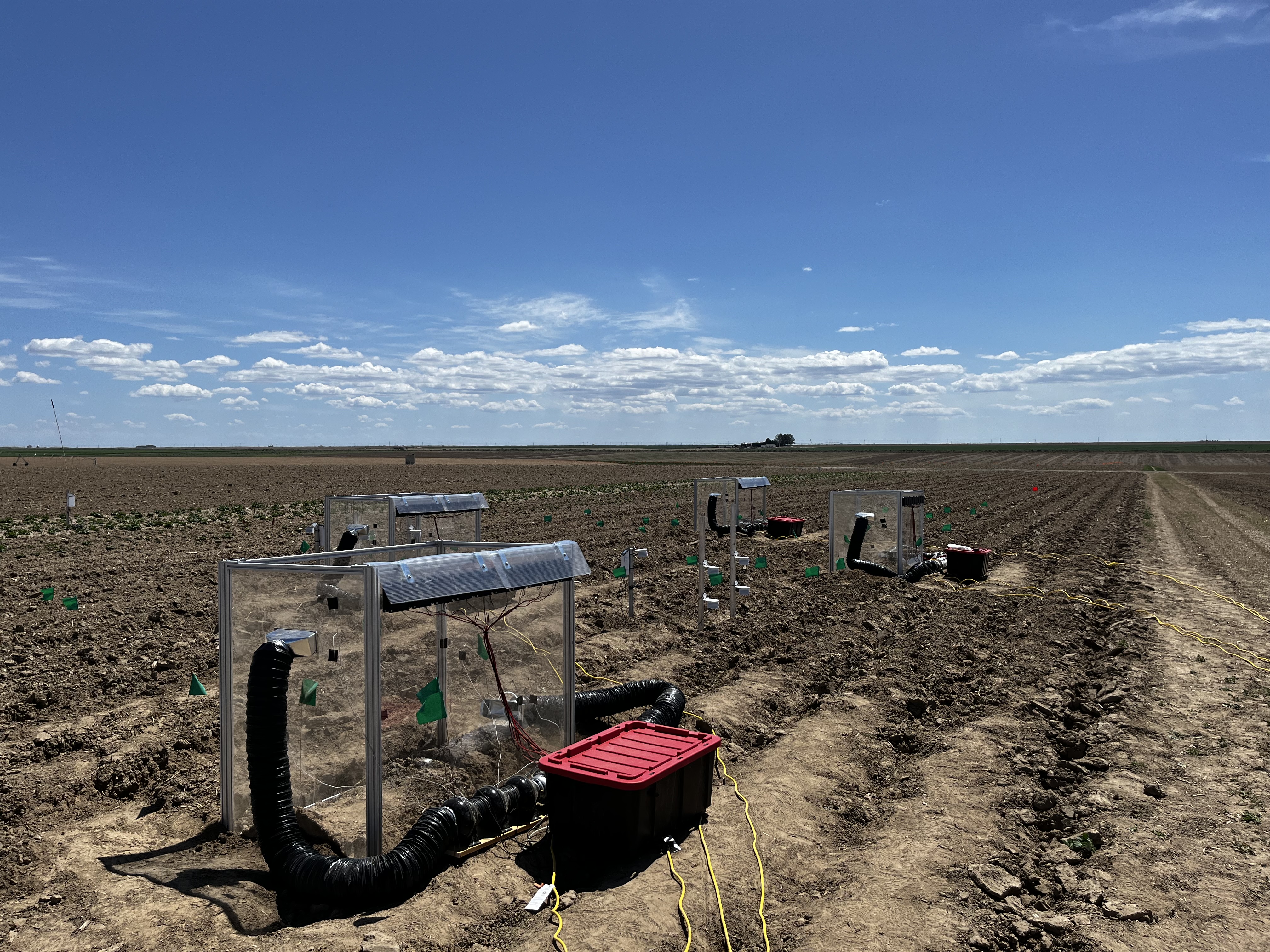
Final Design
Field-Deployed Problems & Solutions
Our final design was deployed in May of 2024 in a field 2hrs out from W.S.U. in Othello, WA. I stayed over a summer to continue development and provide maintenance on the design.
I focused my efforts on increasing reliability of power delivery and sensor systems, and decreasing variability in temperature distribution. While I focused on those three problems I also provided maintenence and fixes for other problems such as electrical faults, and water ingress. With each problem I faced I was able to respond with a unique solution, off the shelf part, or fix in a timely matter.
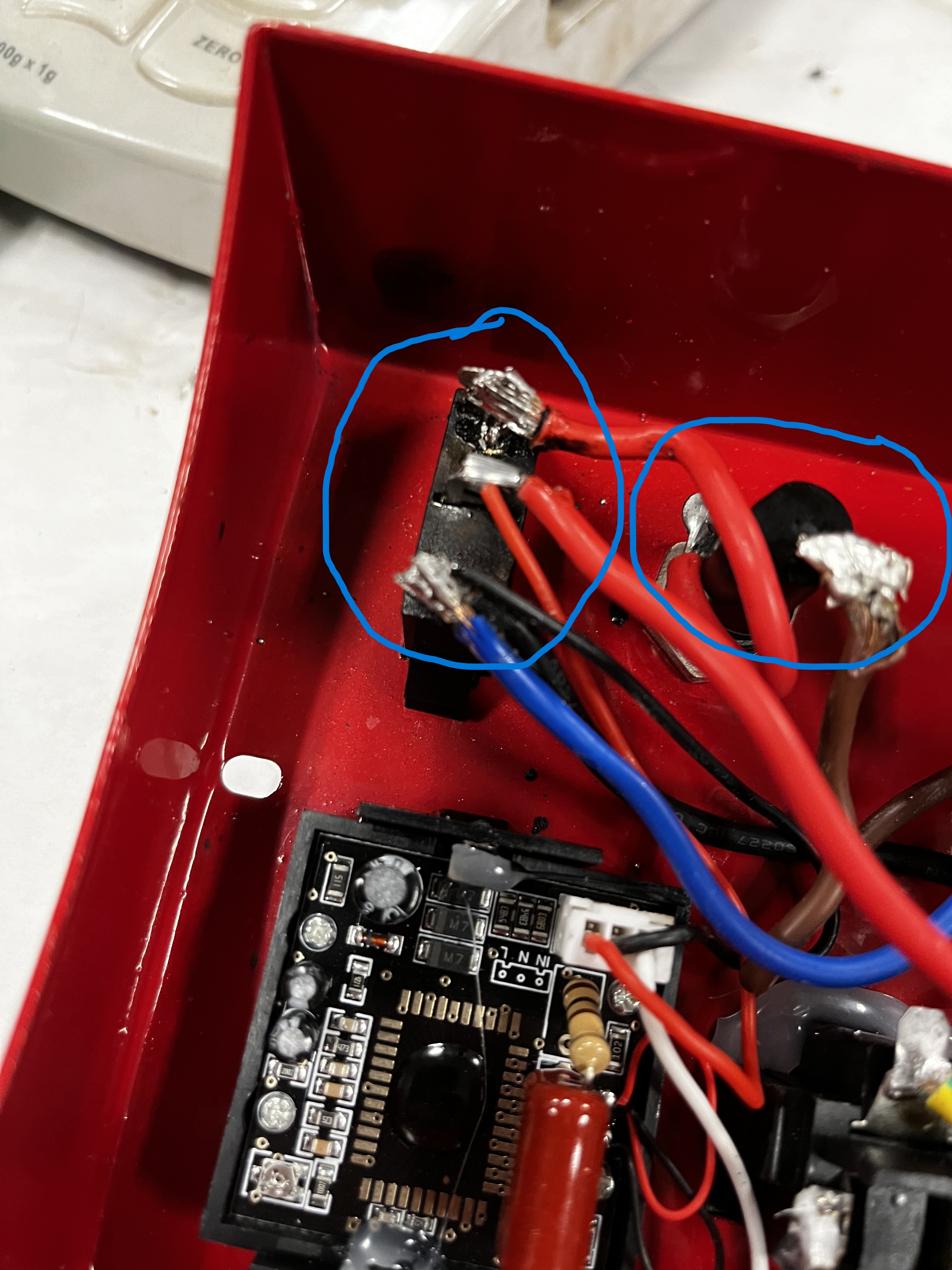
Problem: High current draw caused solder joints to overheat and disconnect wiring.
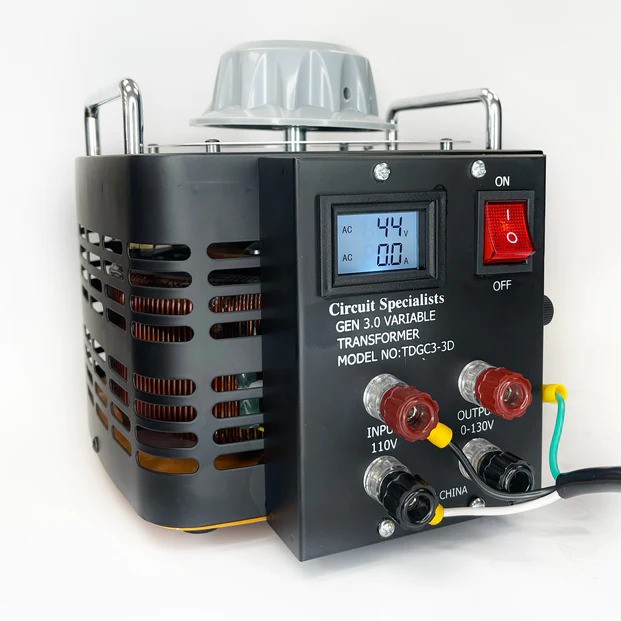
Solution: New power supply supports higher peak and continuous current draw.
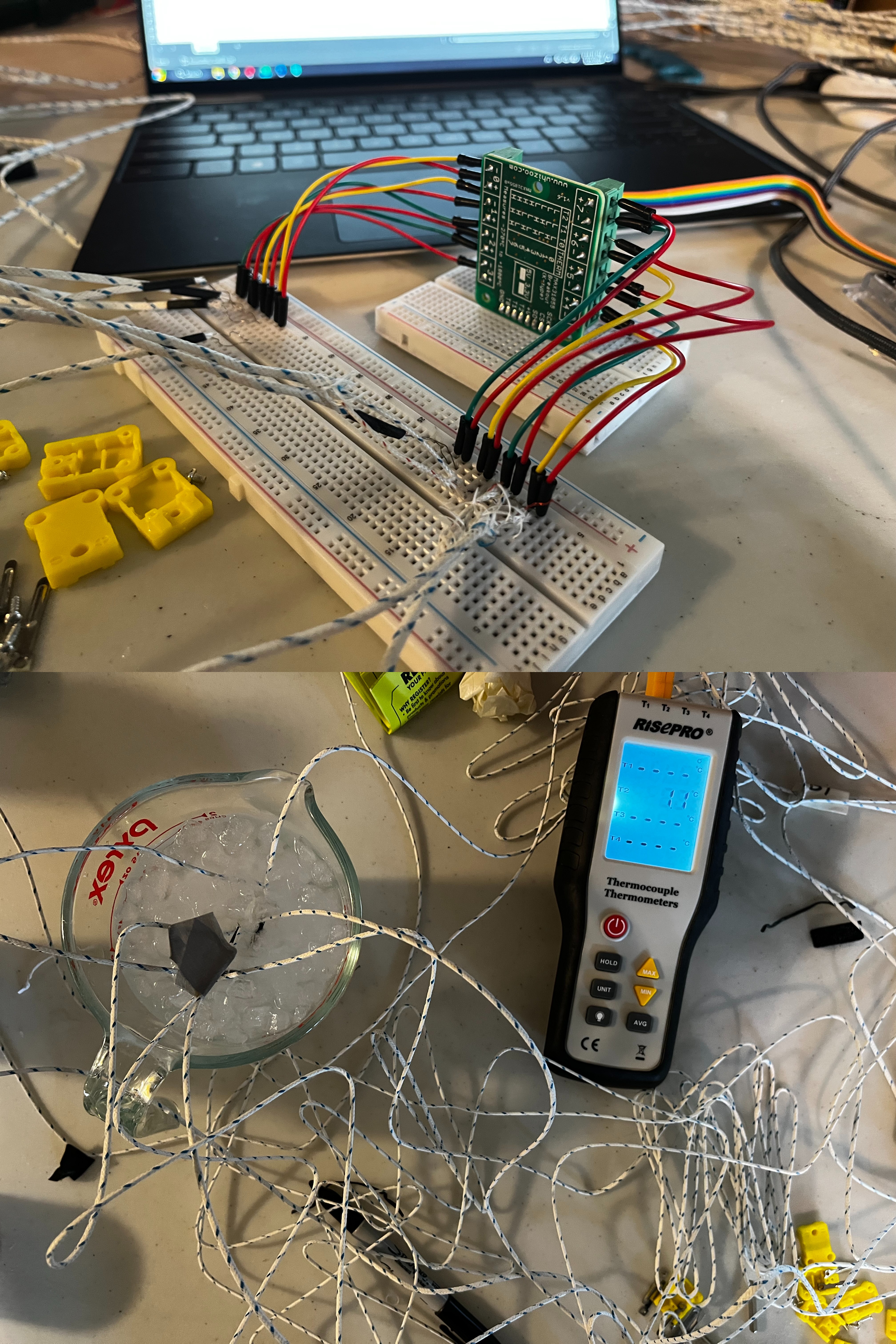
Problem: Thermocouples reported erroneous readings due to polarity issues and thermal effects on breakout board.
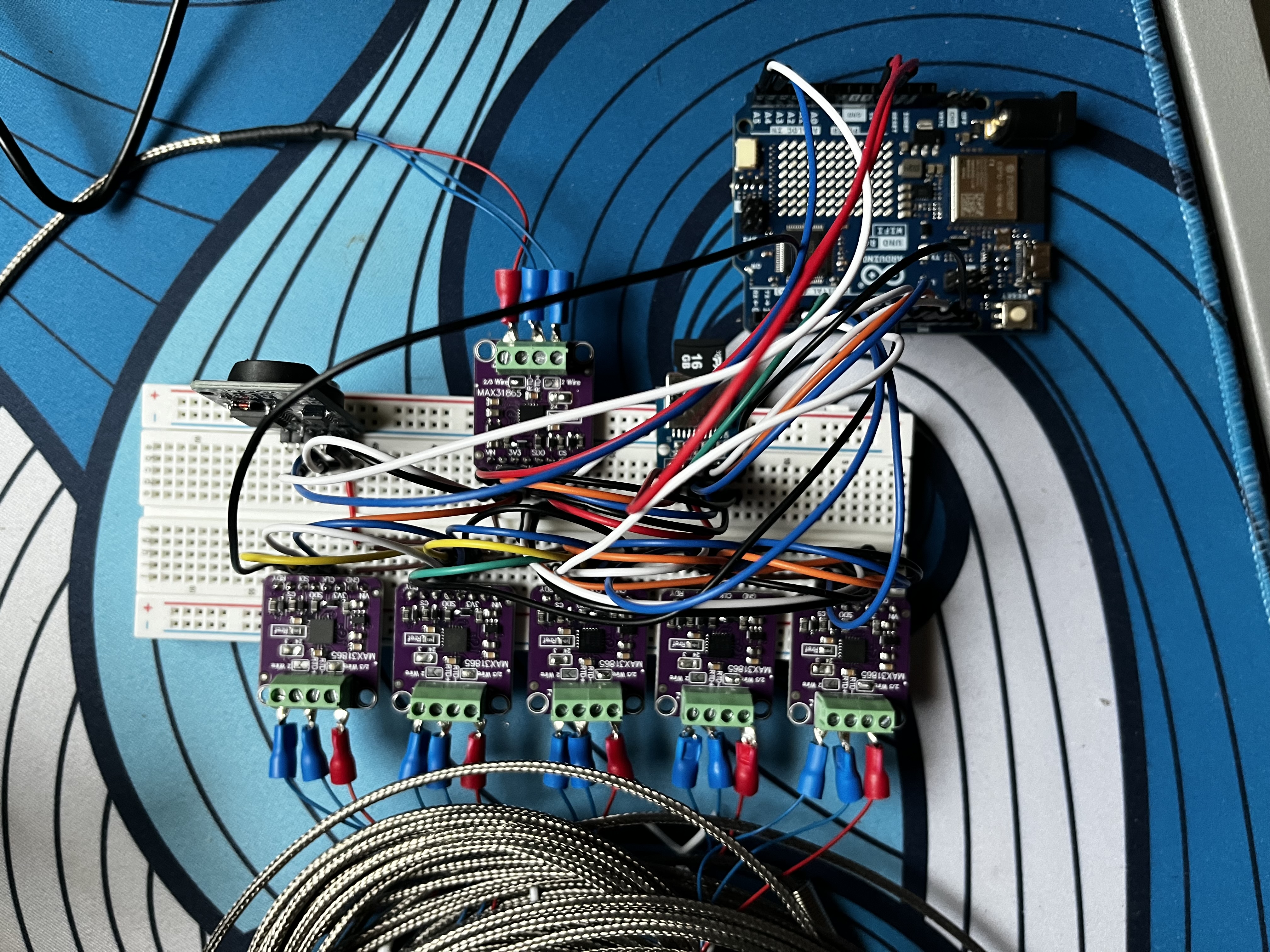
Solution: RTD sensors provided accurate readings, enabling better voltage control.
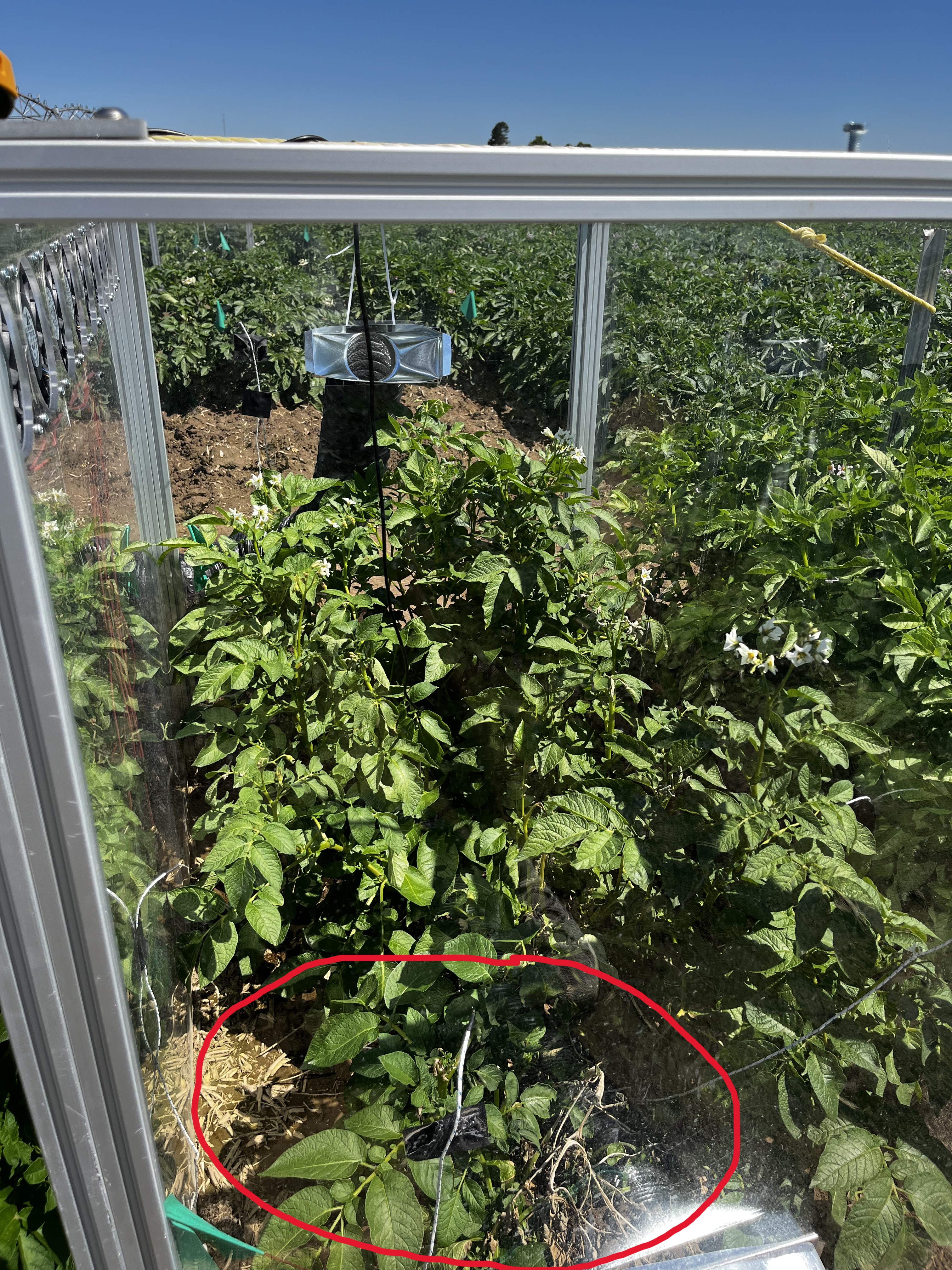
Problem: Uneven temperature distribution visually identified by wilting foliage.
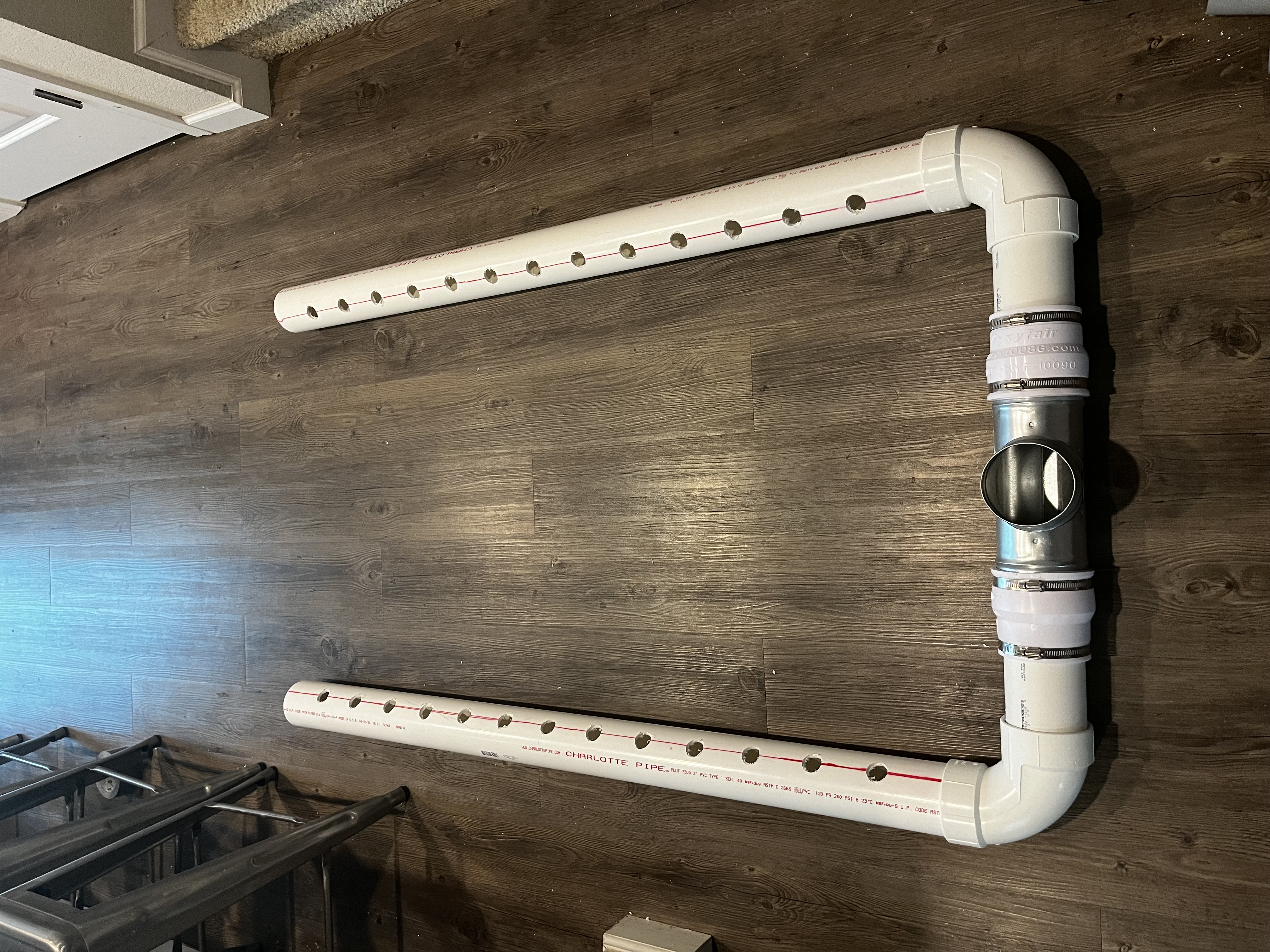
Solution: Redesigned airflow system using PVC pipes ensured even temperature.
Research Outcomes
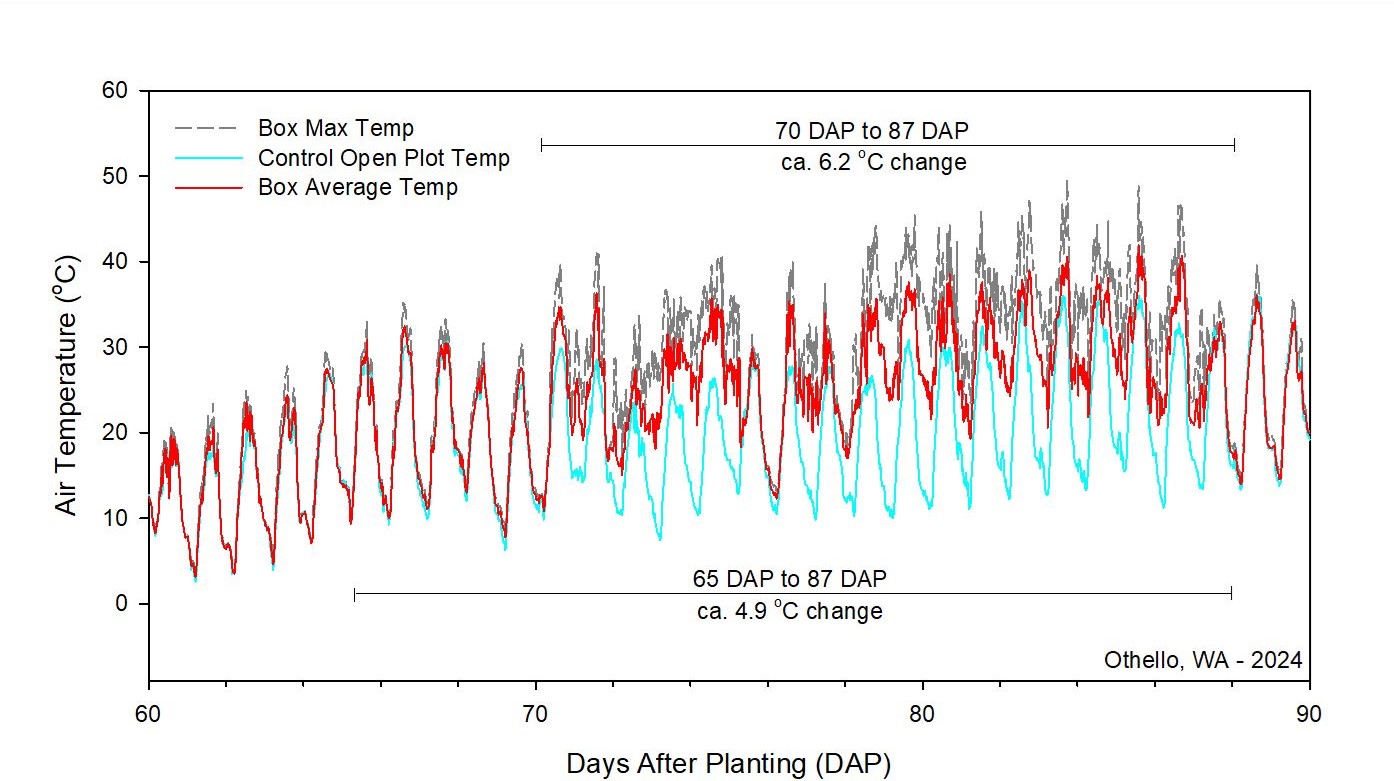
Heat box was activated 70 days after planting and remained operational until day 87.
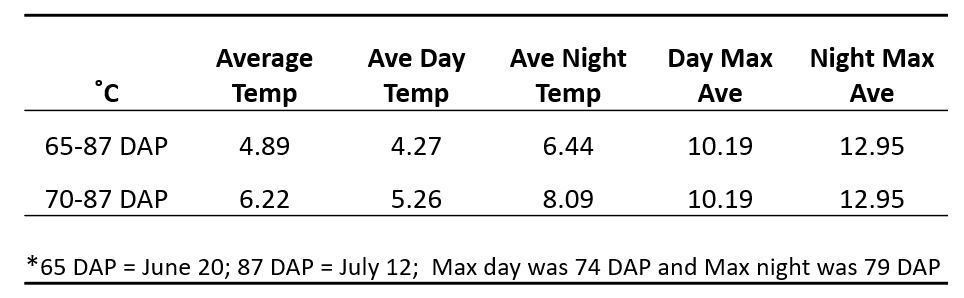
Maintained at least 5°C above ambient average temperature; RTD sensors were pending installation.
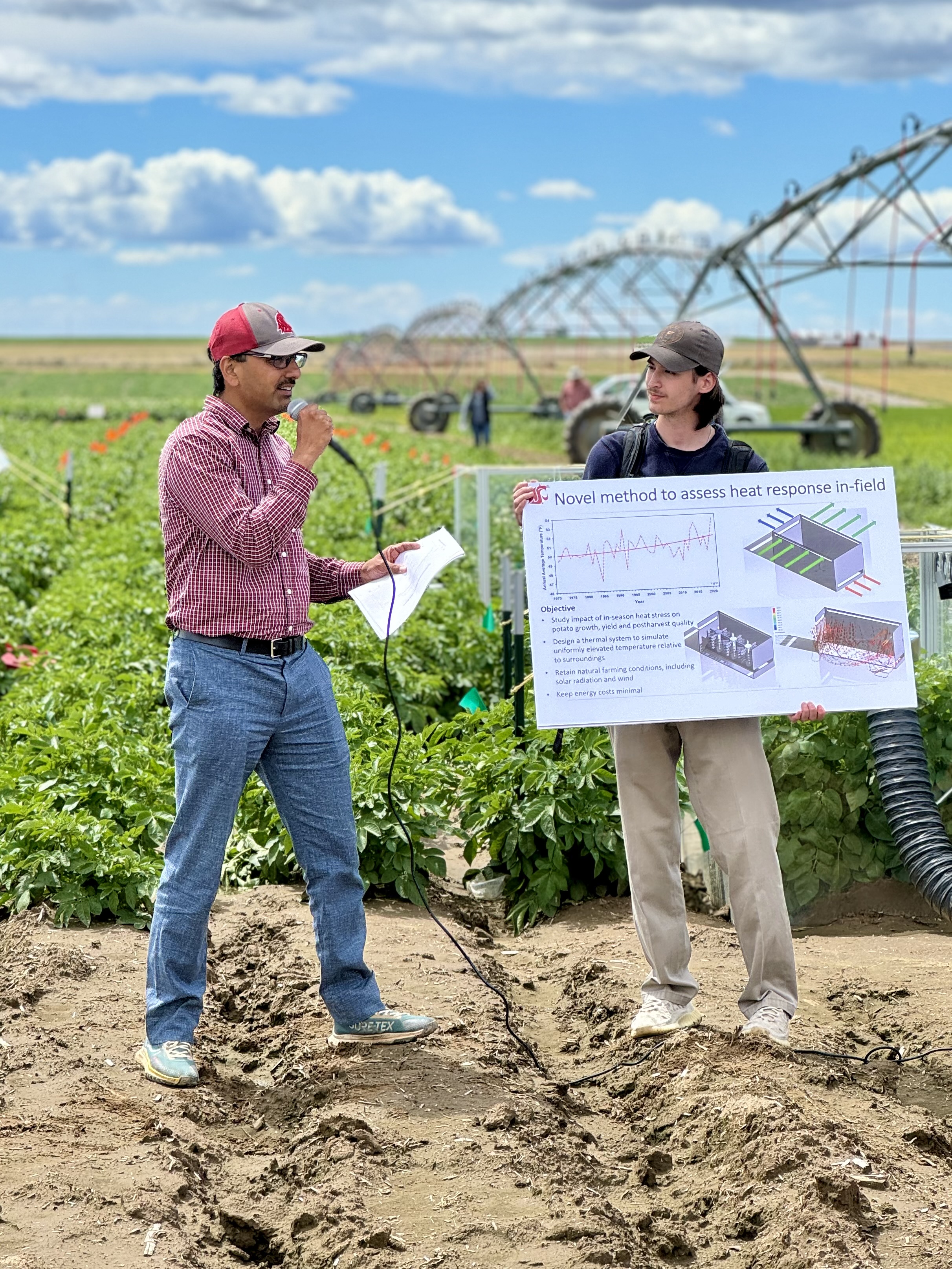
Potato field day presentation at WSU Othello research unit(2024)
Kenworth-PACCAR Senior Design Project | Aug - Dec 2024
Problem
W990 Hood Struts are sized inaccurately, not providing enough assistance for initial hood lift-off. Struts were originally based on simulation solutions, which are reported to be inaccurate.
Solution
Utilize two pneumatic cylinders to open and close the hood in place of the mechanical struts, simultaneously measuring force at strut locations using load cells attached to the cylinders. This solution outputs force and hood angle data from the arduino system to a python program for post processing, and graphical representation. The processed data is stored in a .csv file and can be used to correctly size a W990 strut. Alternativley the pneumatic cylinders can replace the struts themselves eliminating difficultly with opening and closing the hood entirley.
System Diagrams
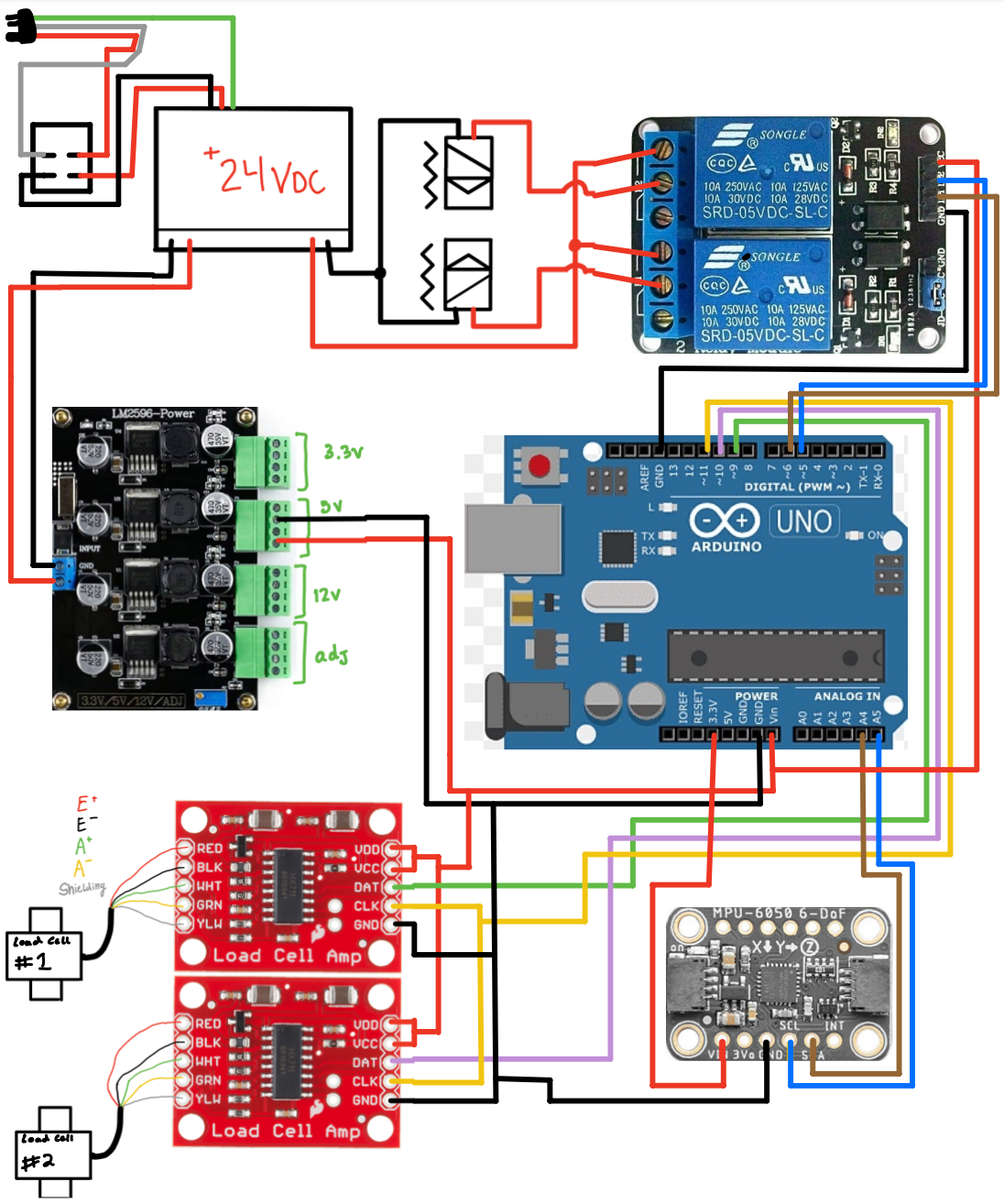
Controls System: Controls solenoids on main valve using relays, and gathers data from load cells.
Main Components: Futek load cells, load cell amplifiers, Arduino Uno, Adafruit MPU 6050, 2CH relay, and valve solenoids.
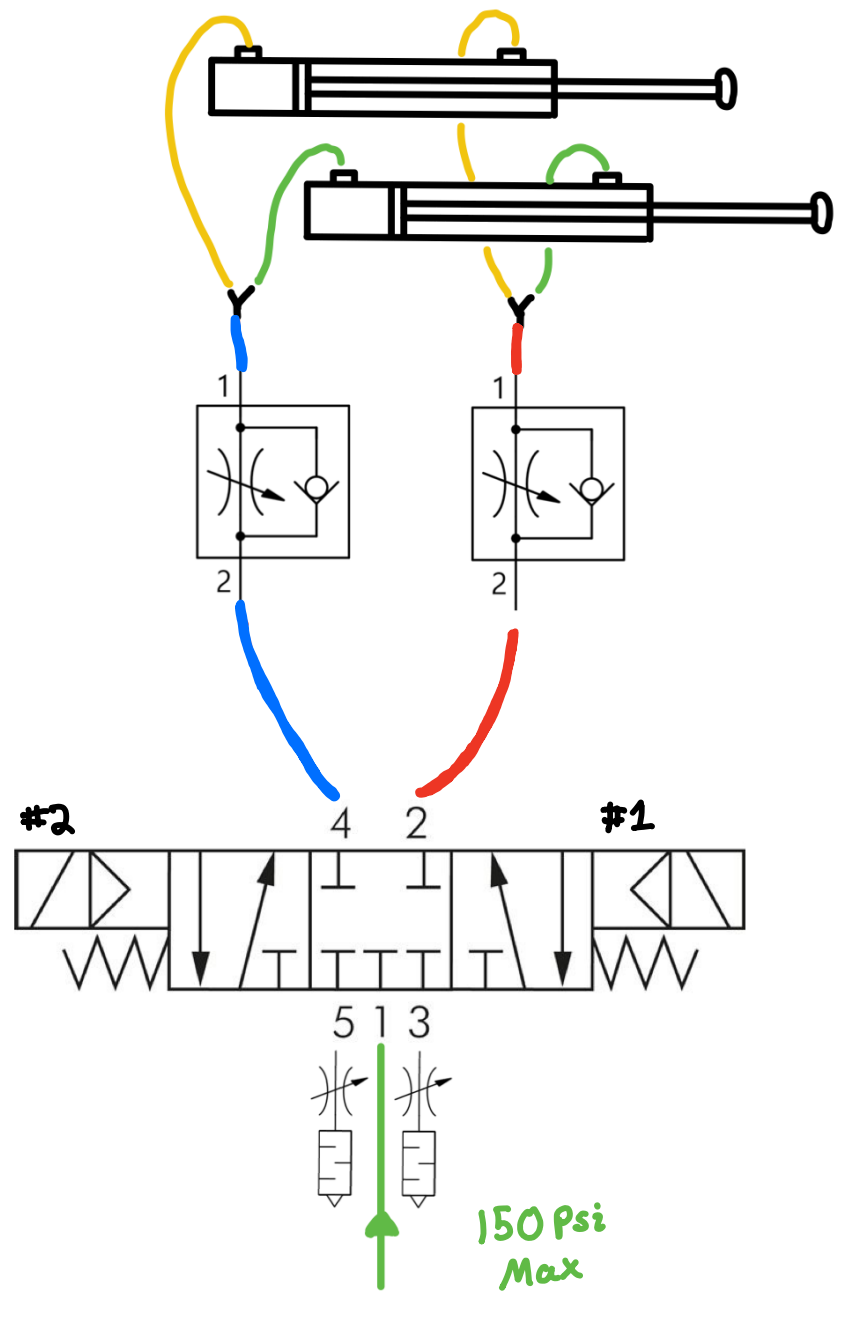
Pneumatic System: Configures airflow to dual-action cylinders.
Main Components: 5/3 way closed-center valve, flow restrictors, dual-action cylinders, and exhaust flow restrictors.
Cylinder Components
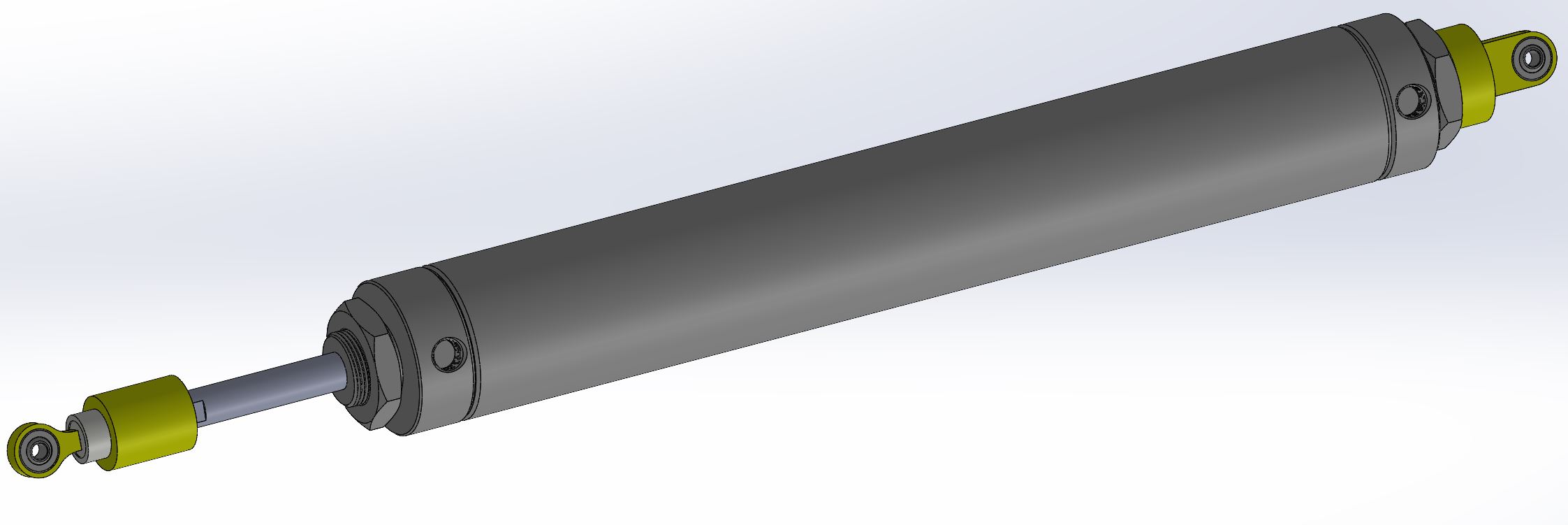
Yellow parts designed in CAD for connecting the load cell, cylinder, and swivel joints together.
Electrical Housing
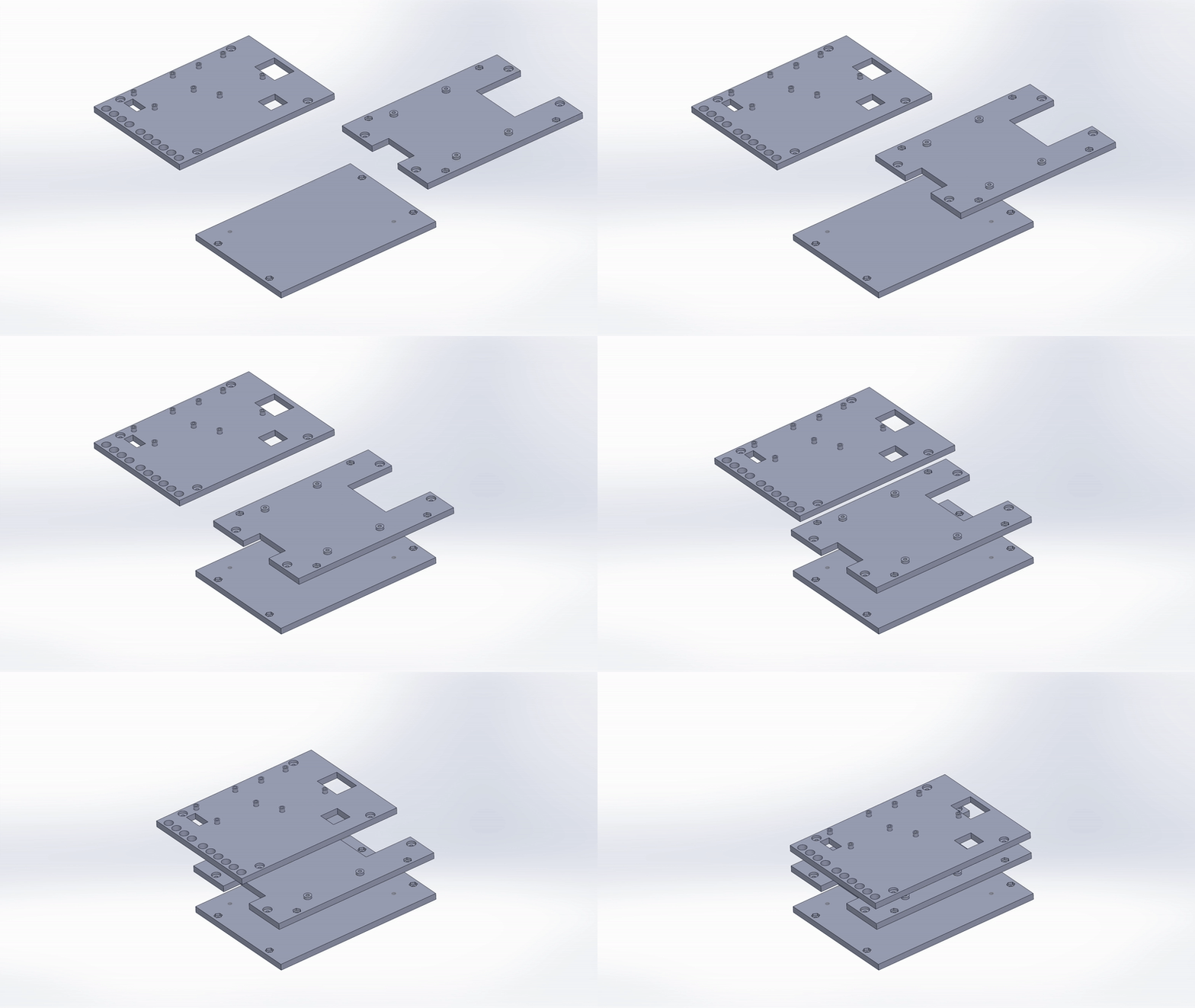
Houses electrical components and provides holes for cable management and ziptie strain relief on cable connections.
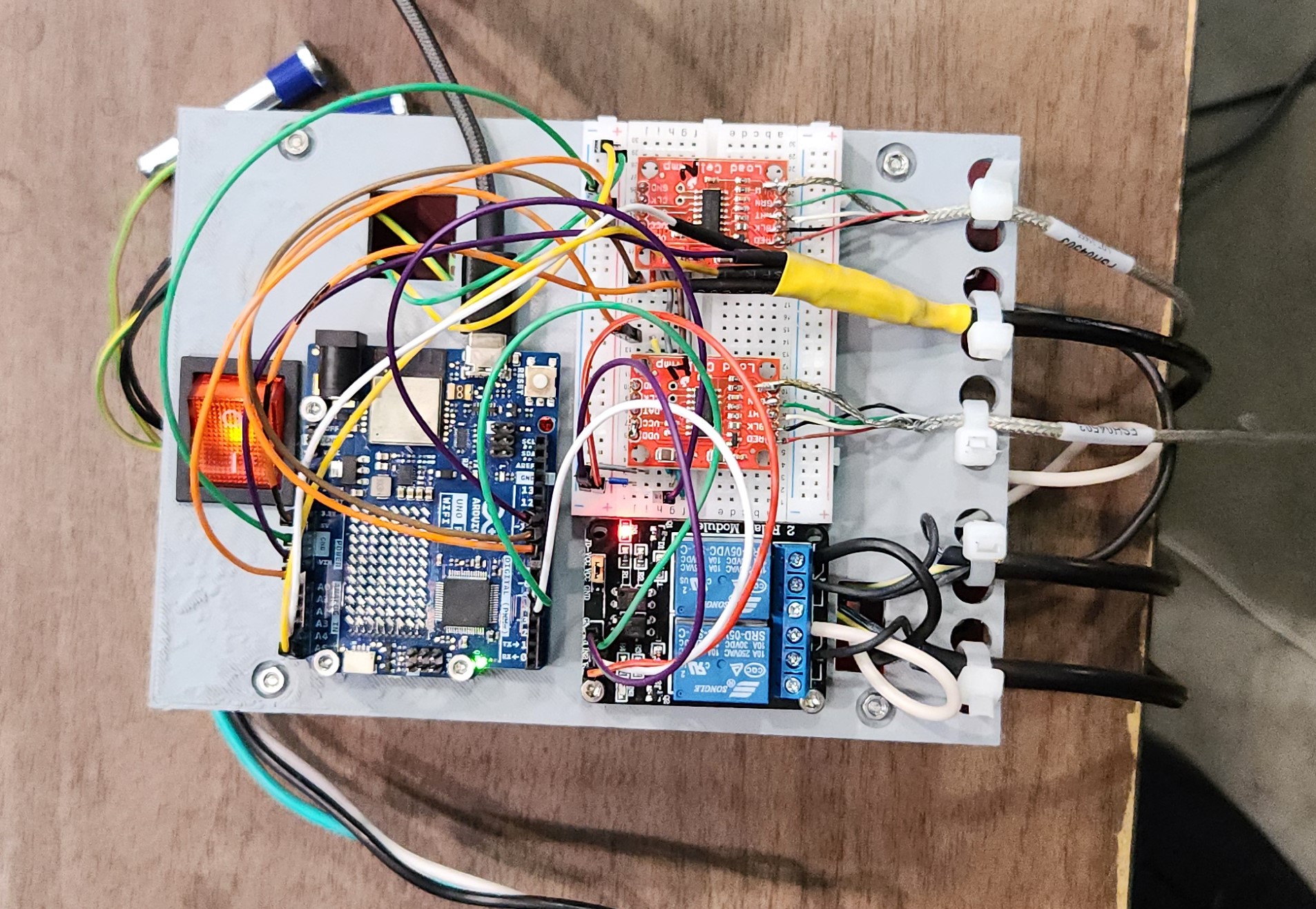
Picture of components mounted in compact housing.
Test Rig
Test rig replicating strut mounting positions, allowing testing without access to a W990 truck (sped up 4x).
System "walks" due to inaccuracy in hole position on wood frame, PSI is heavily reduced due to weaker wood structure used
Final Validation
Hood Extension
Chassis and hood mounts on truck are positioned symetrically eliminating "walking", system operating at designed 100-120PSI speeding up actuator motion.
Hood Retraction
Data From Final Tests
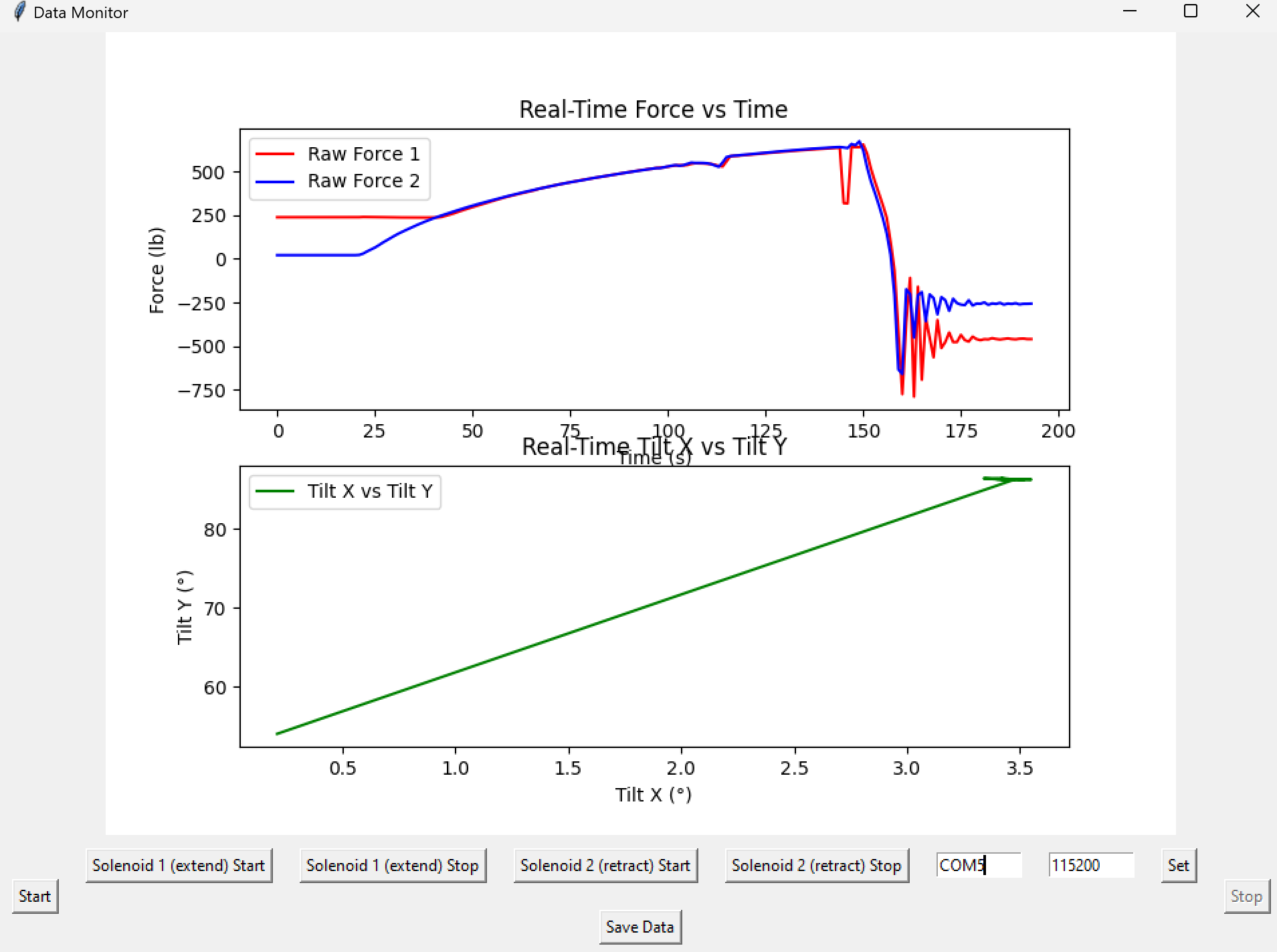
Extension Force Graph
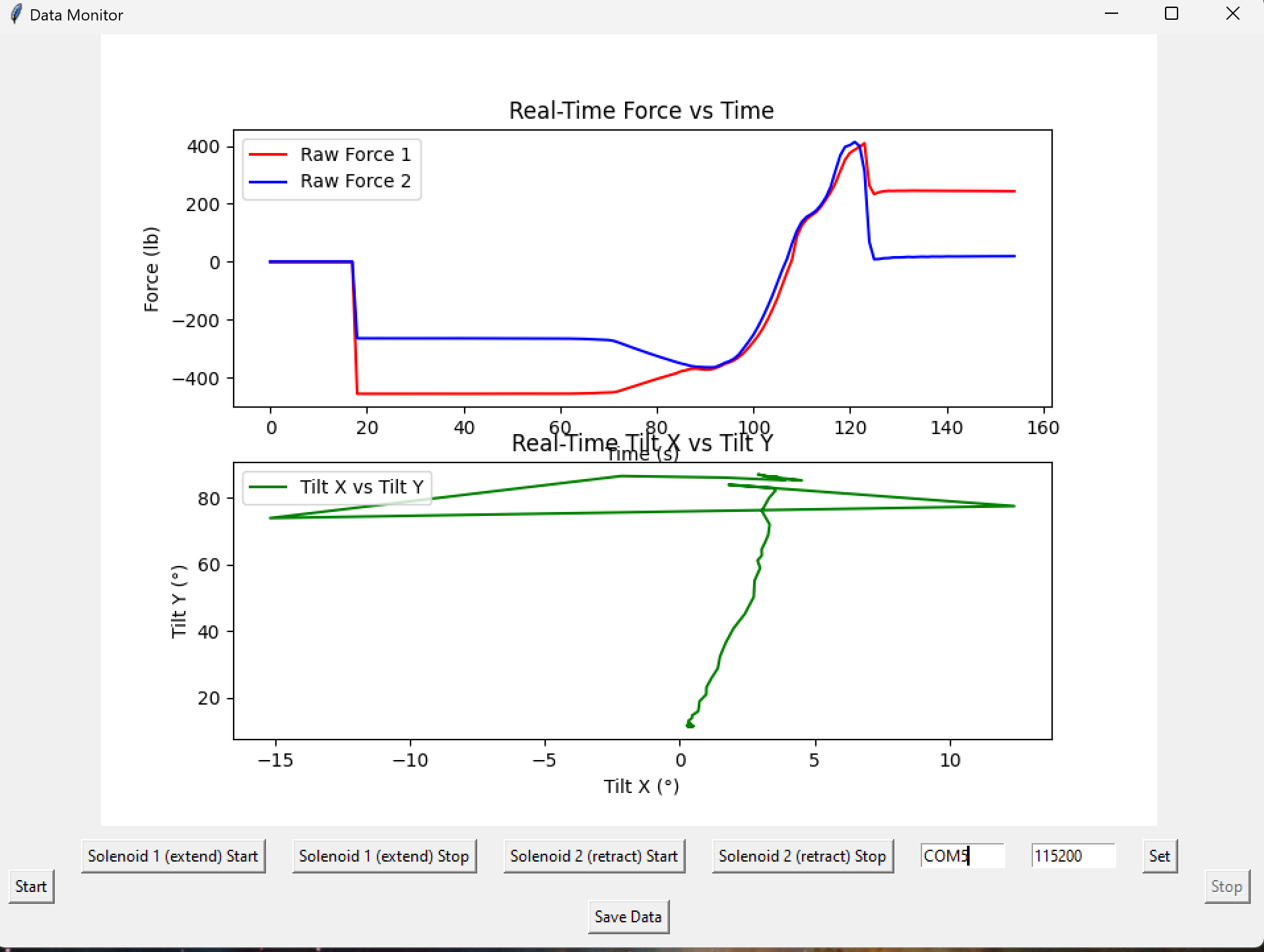
Retraction Force Graph
Certifications
Engineer In Training (EIT)
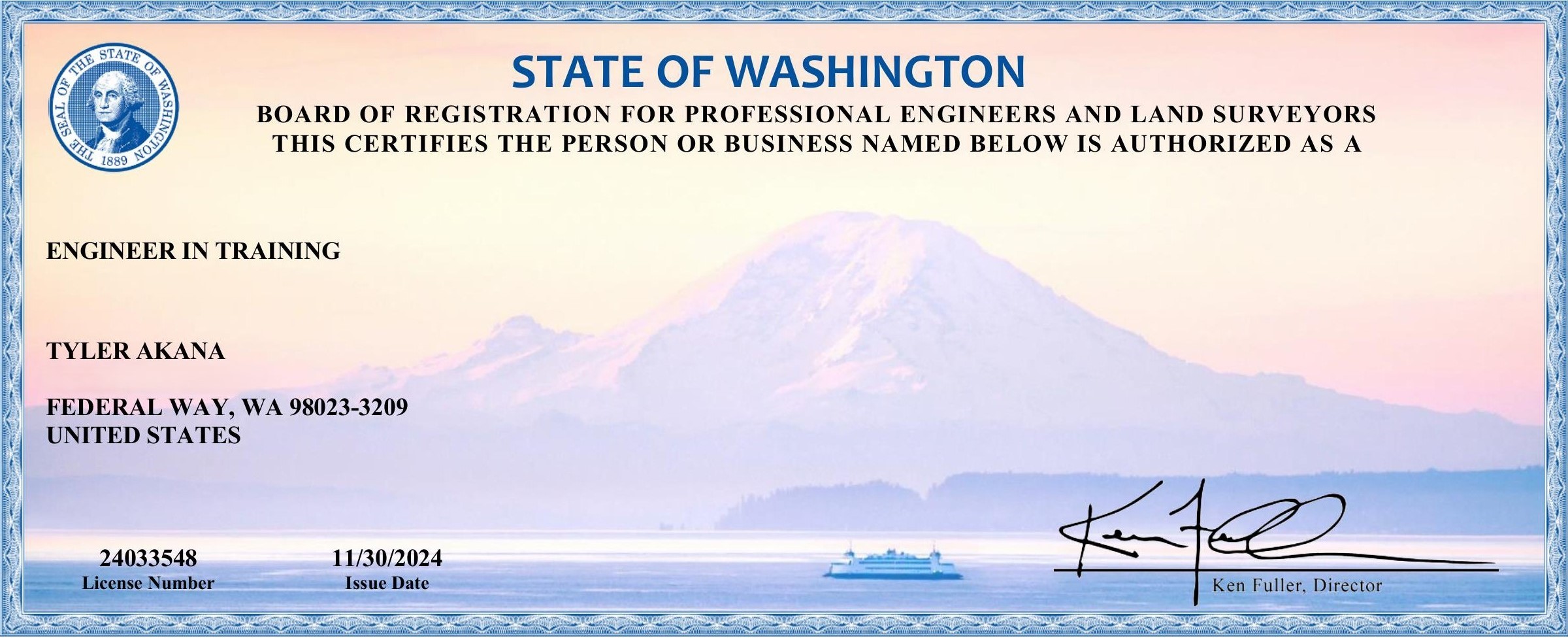
*Address removed from certificate*